

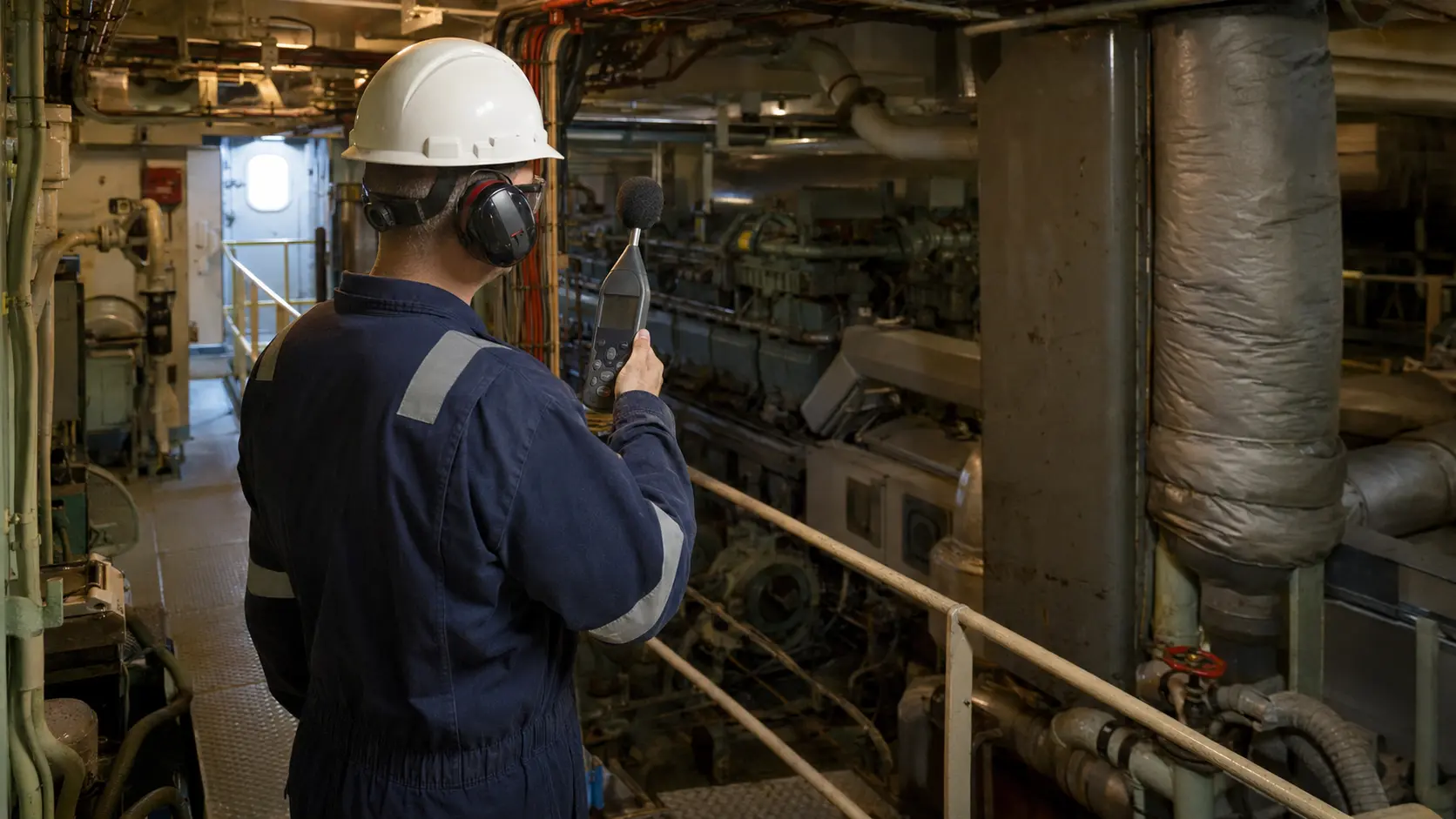
Onboard Noise Monitoring, Survey and Ship Noise Testing
Uncontrolled onboard noise can affect communication, concentration, rest, hearing and the overall quality of life at sea.
21 SPECIALIST SERVICES
Clients may know the formal survey name or simply report a noisy ship, a shaking cabin, abnormal machinery vibration, stuffy air, an inaudible alarm or concern about remaining steel thickness.

21 survey services
Uncontrolled onboard noise can affect communication, concentration, rest, hearing and the overall quality of life at sea.
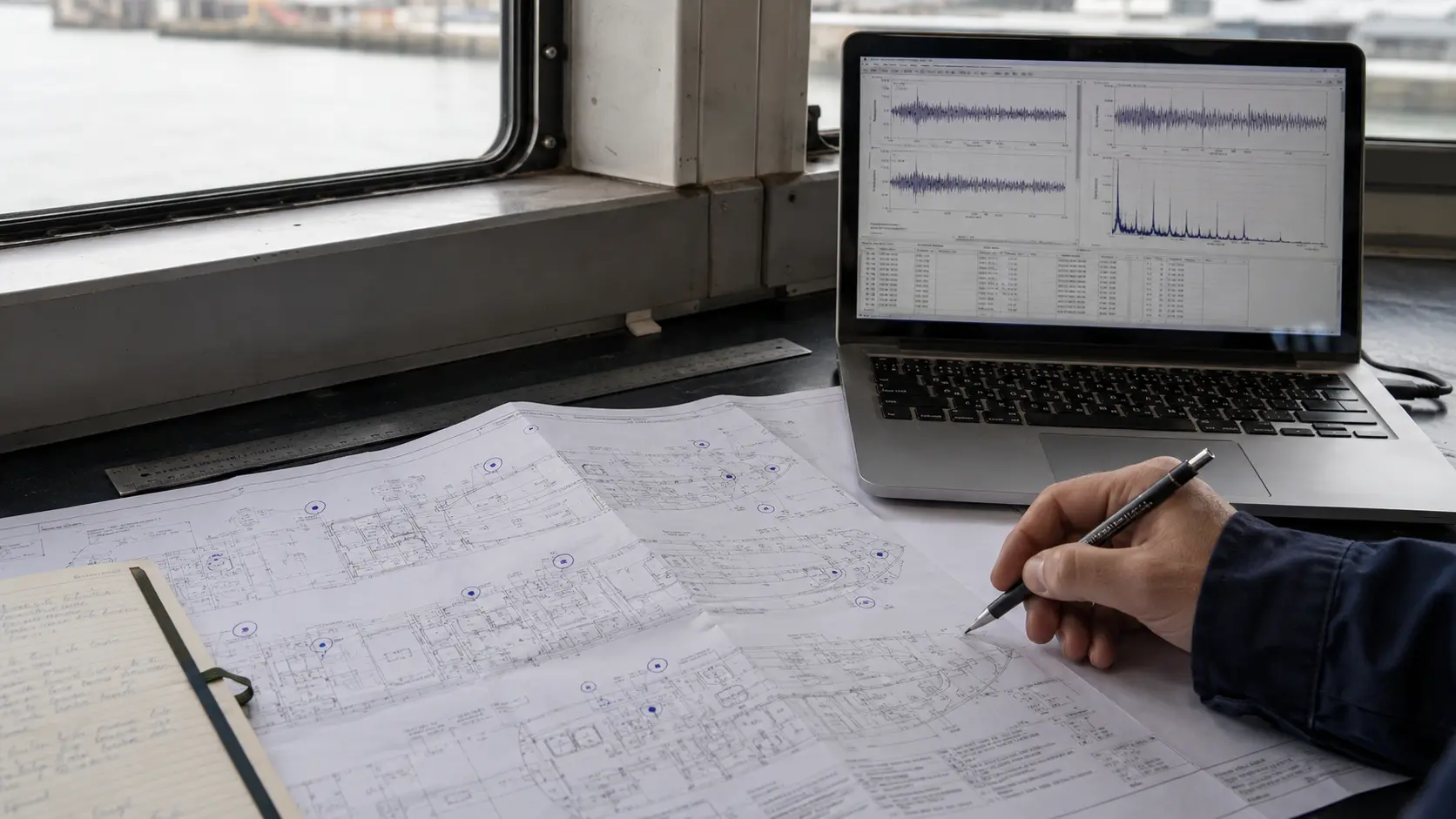
Persistent vibration in cabins, offices, mess rooms, control stations and passenger areas can affect rest, comfort and confidence in the vessel.
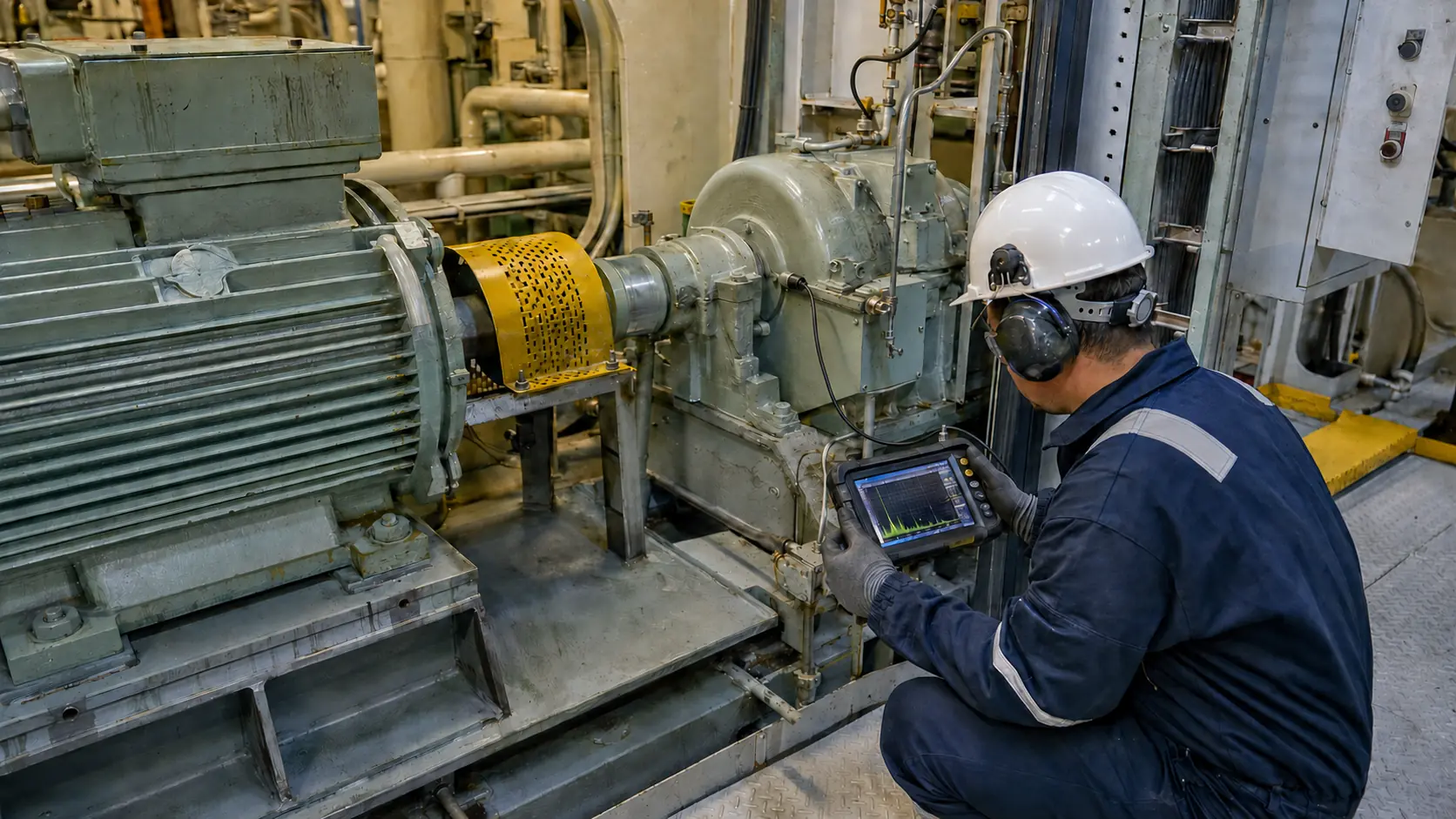
Rotating machinery usually provides measurable warning before a developing defect becomes an operational failure.
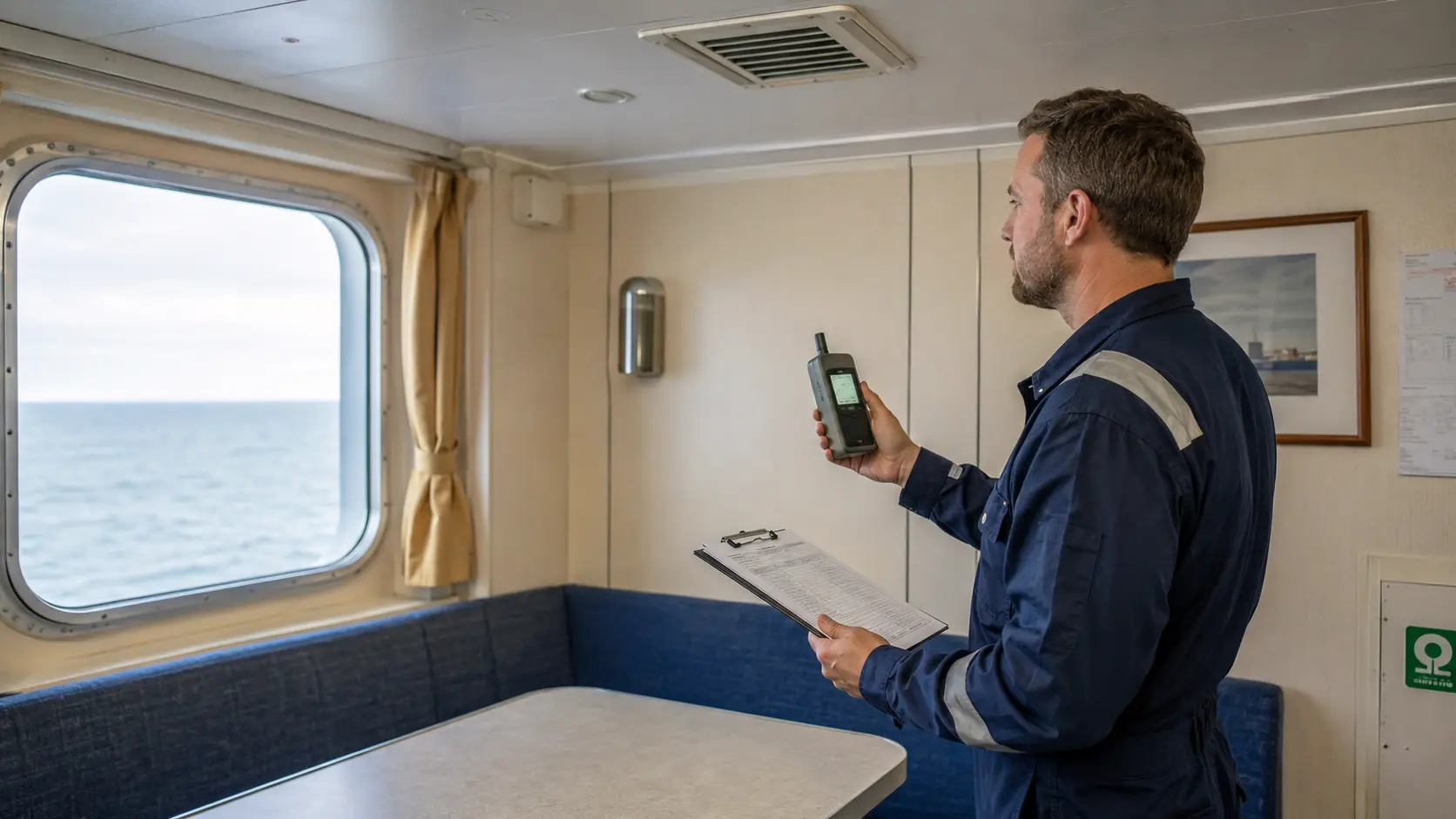
The quality of air inside a vessel affects alertness, comfort, wellbeing and confidence in the accommodation environment.
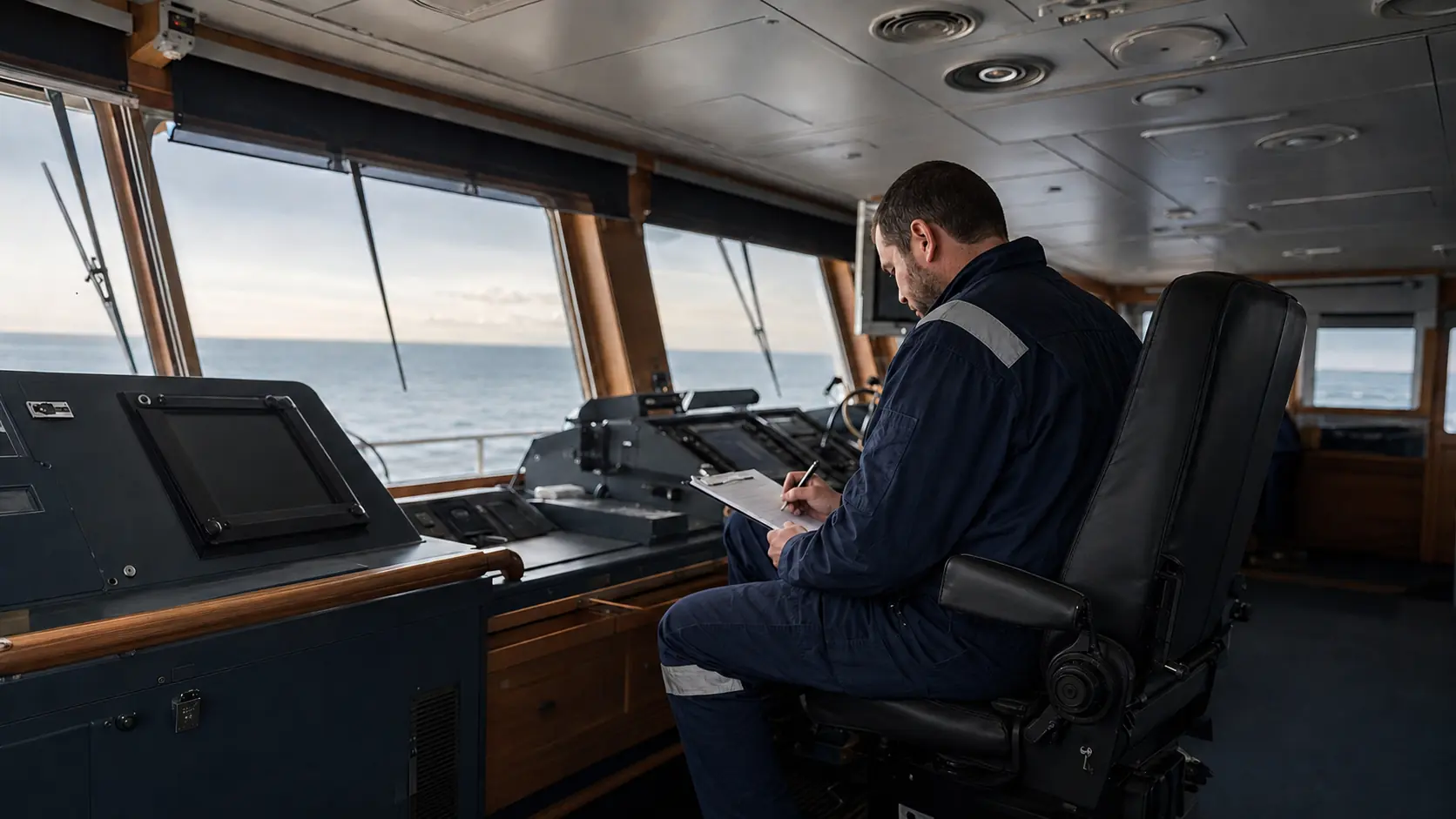
A cabin can meet a temperature setpoint and still feel uncomfortable.
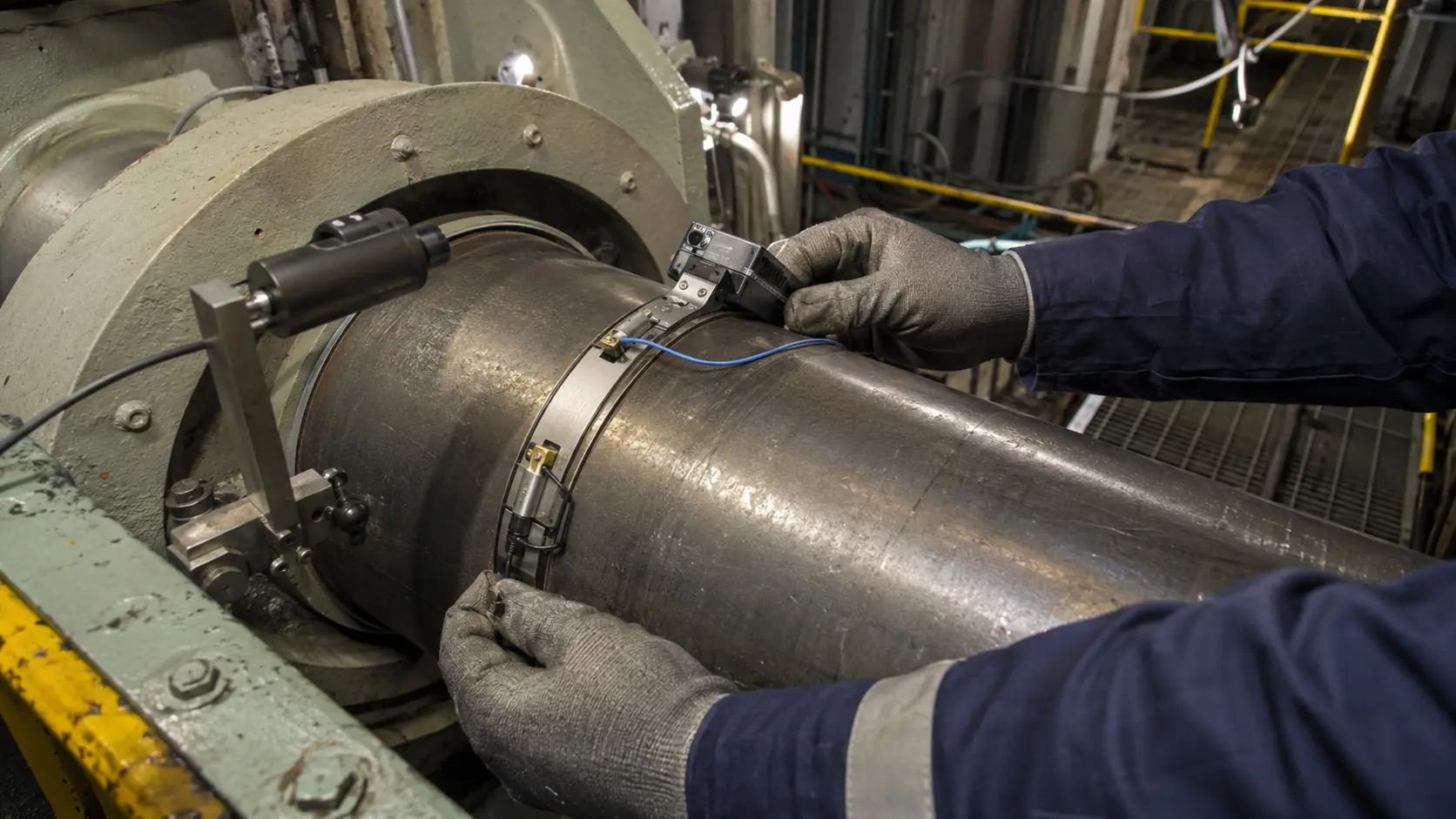
Torsional vibration is the cyclic twisting response of a propulsion or rotating system.
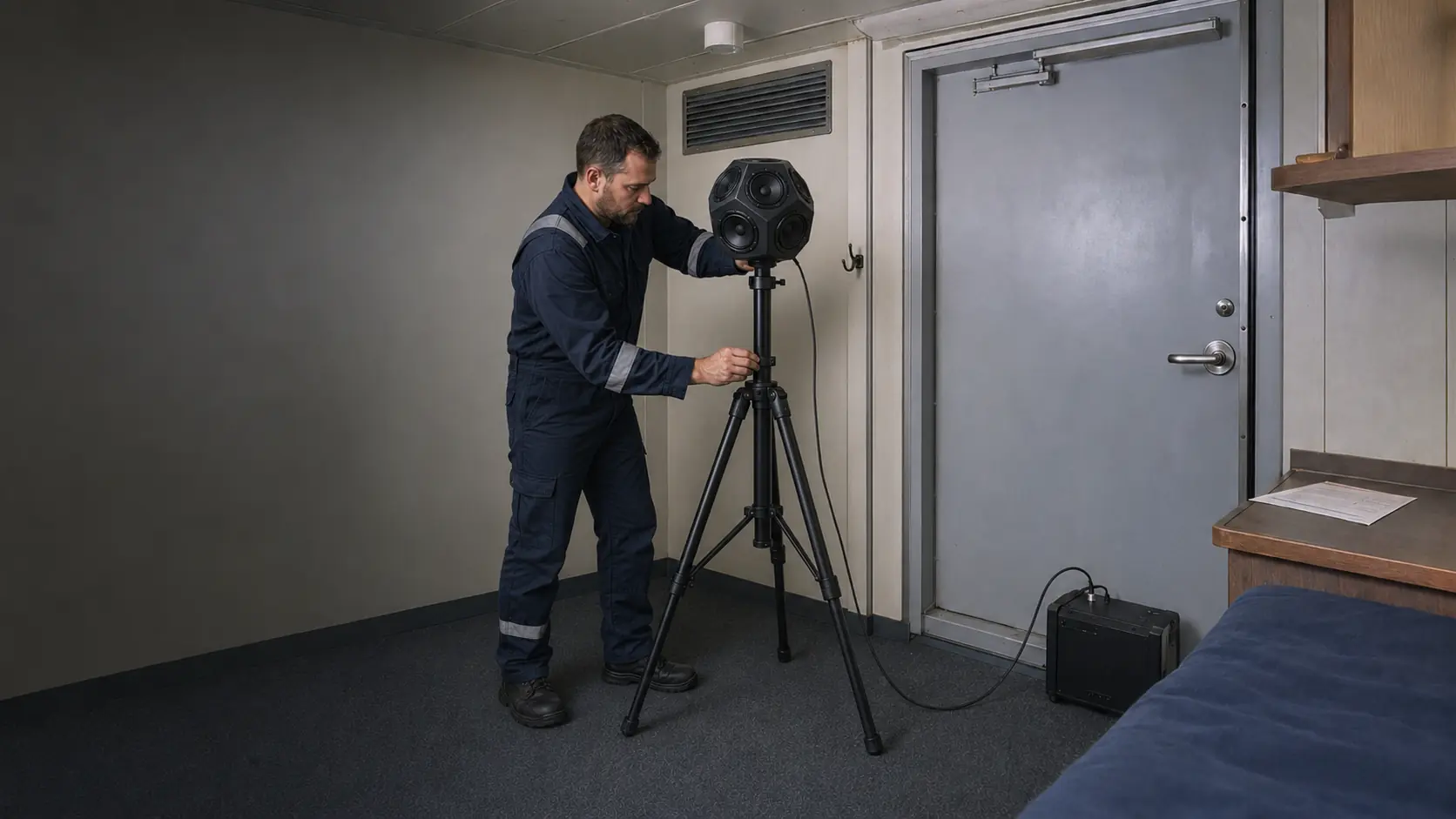
Low noise inside one space does not guarantee adequate acoustic privacy or protection between adjacent spaces.
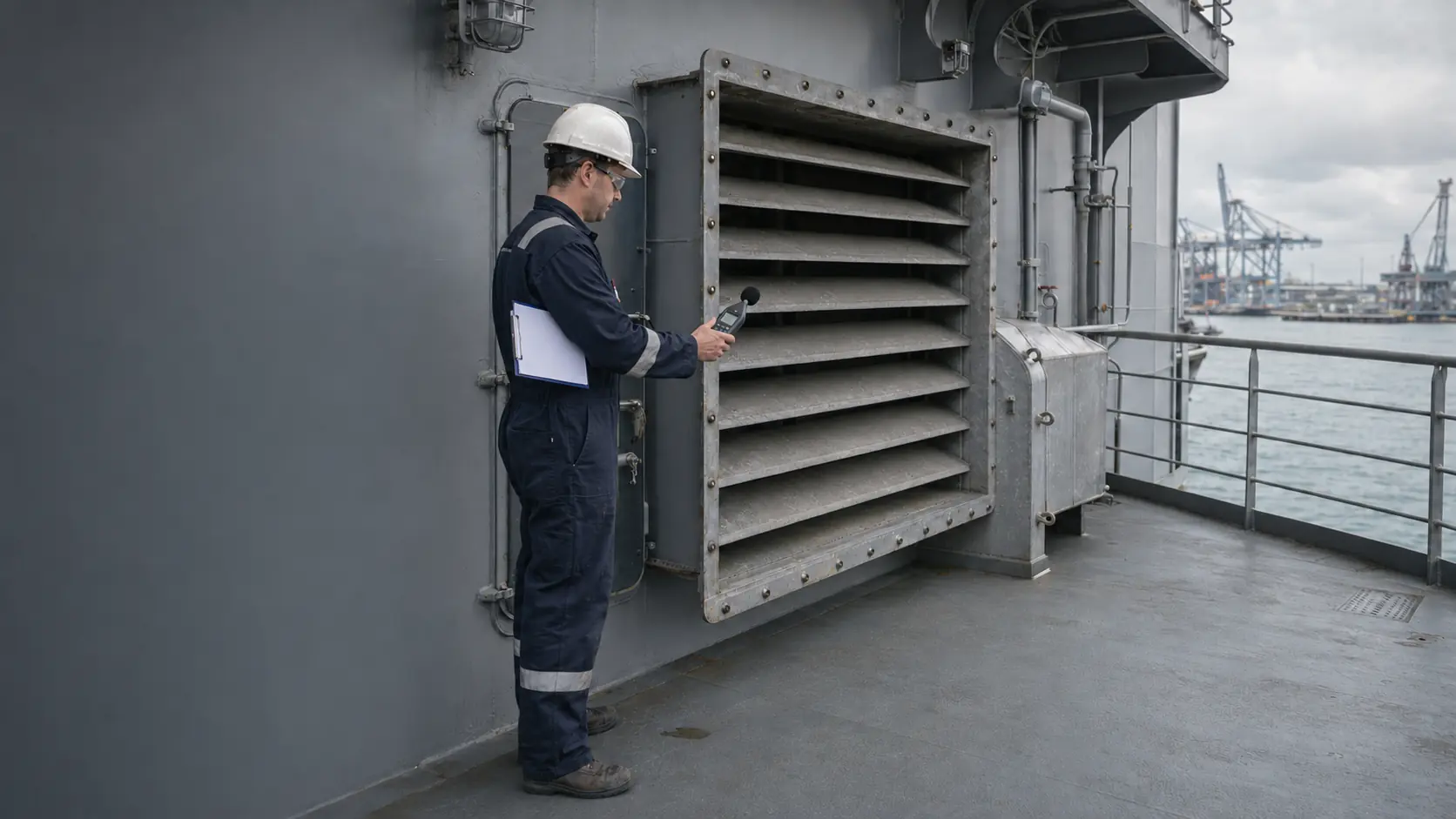
Vessels at berth can operate auxiliary engines, ventilation systems, pumps, exhausts and refrigerated cargo equipment for extended periods.
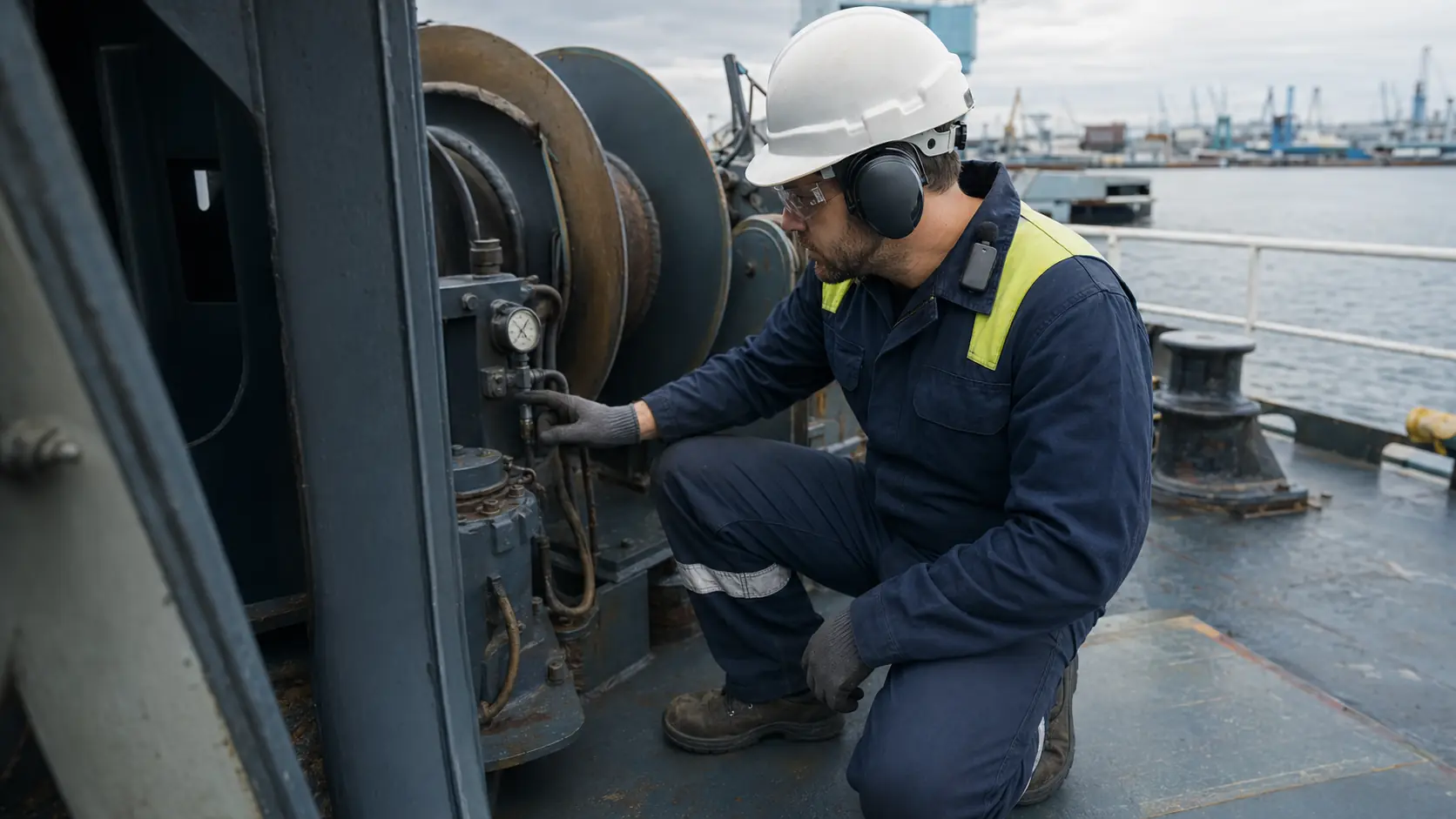
Area measurements show how noisy a space is; personal dosimetry shows the exposure a person accumulates while moving through a real working day.
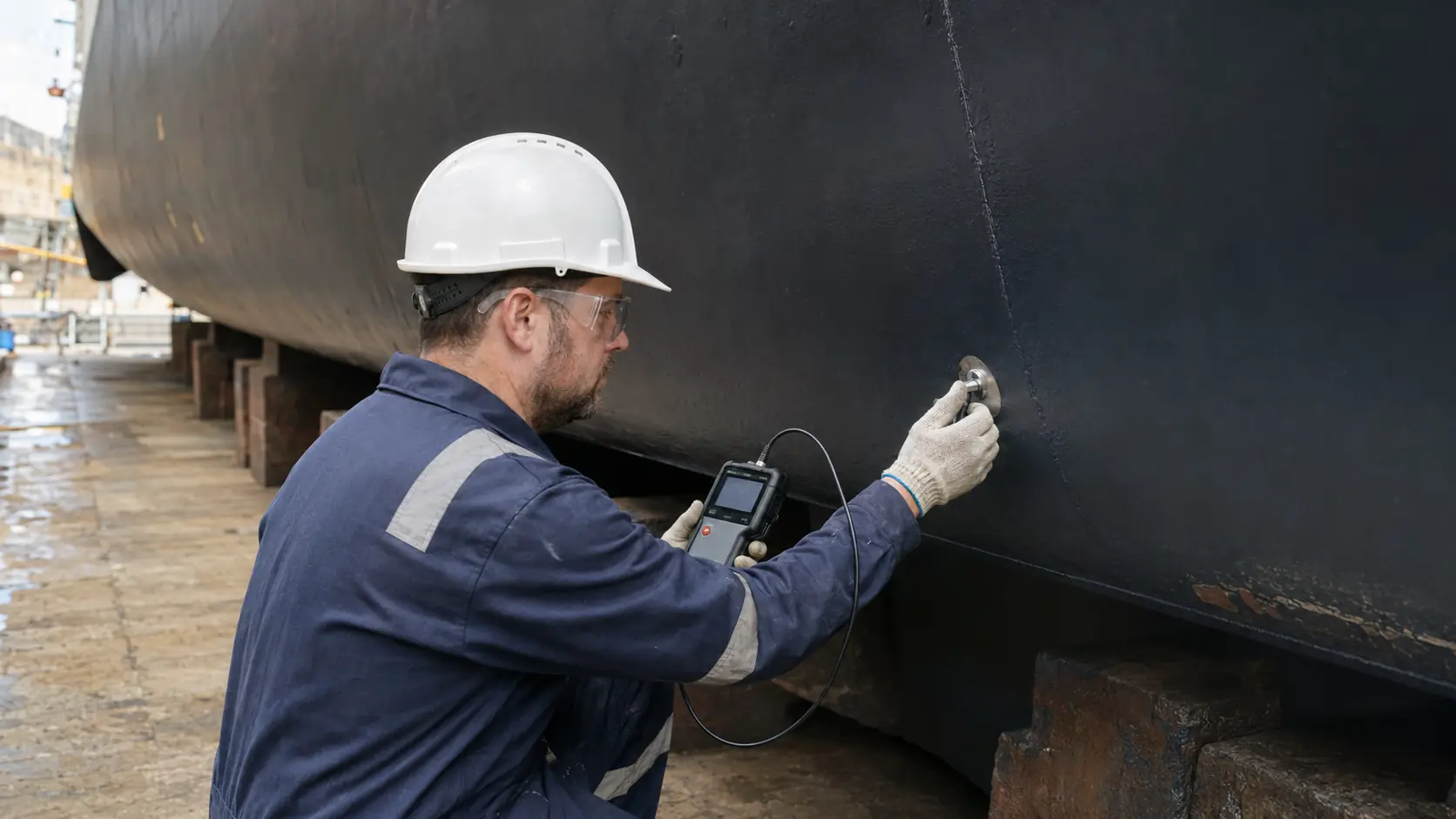
Steel loss can develop beneath coatings, inside tanks, around water traps, at structural transitions and in systems exposed to corrosive service.
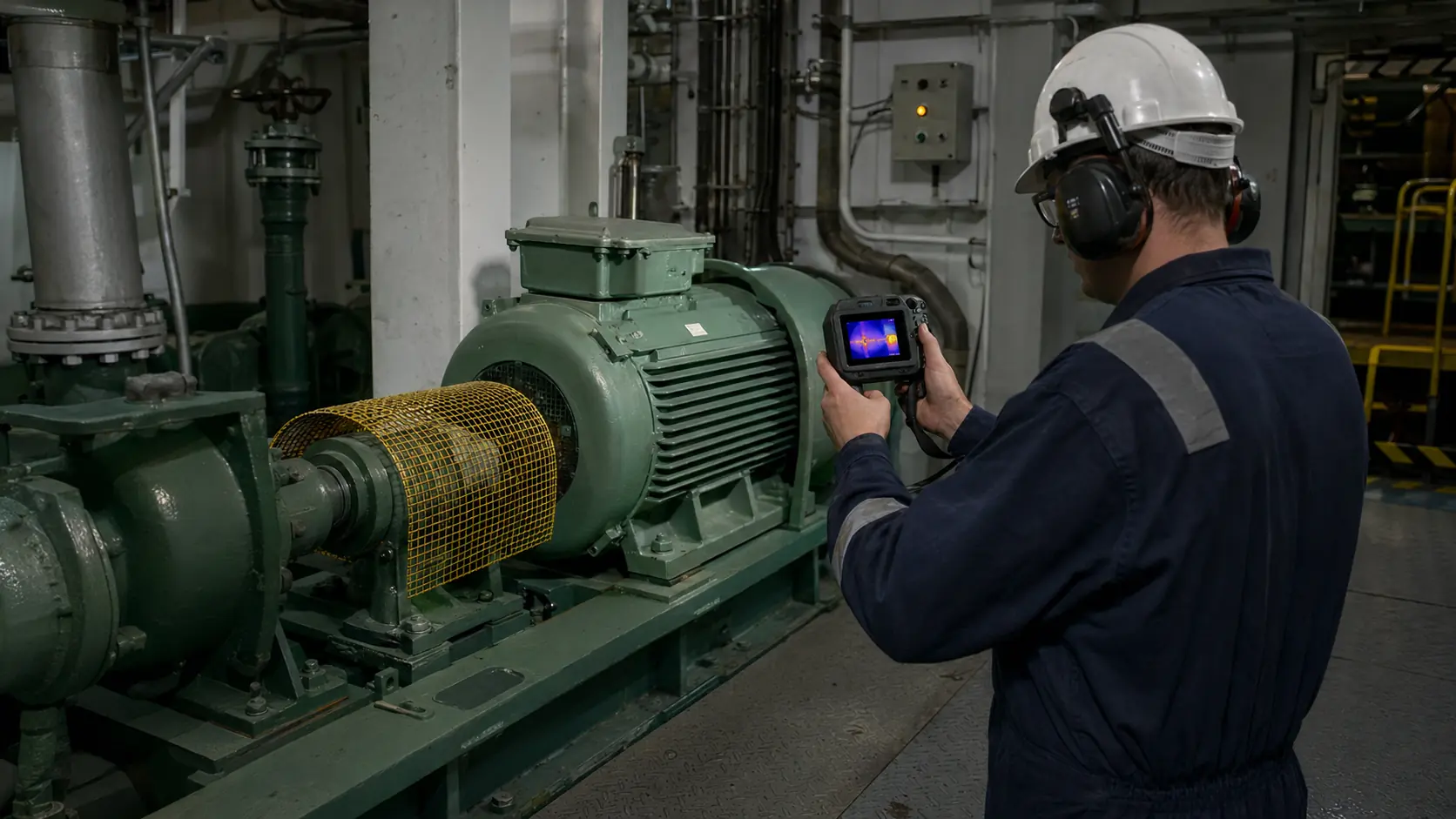
Condition monitoring converts recurring machinery data into an early-warning system for maintenance.

Ballast Water Management Systems must be installed, operated and verified under defined requirements to reduce the transfer of harmful aquatic organisms and pathogens.
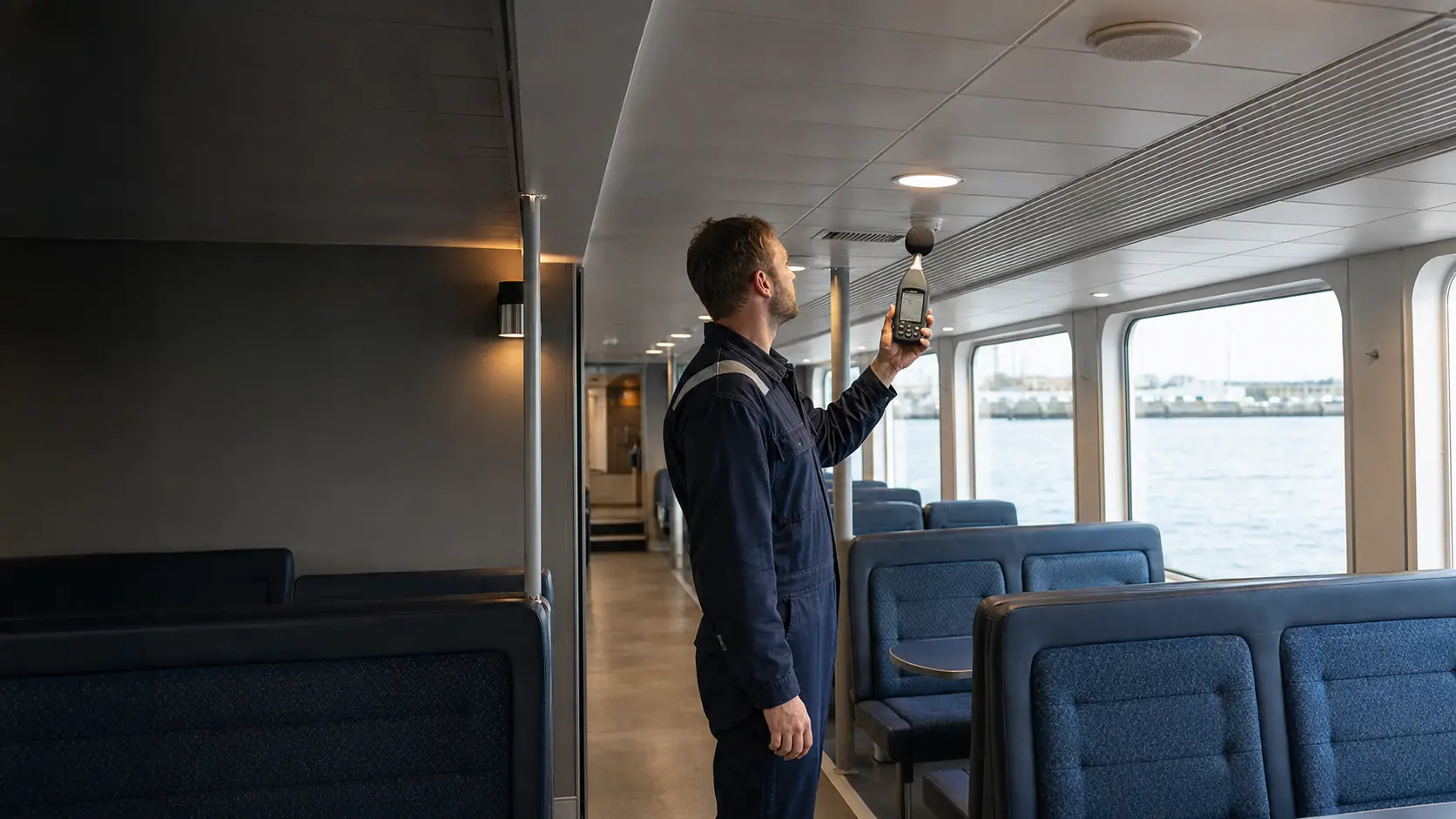
An emergency message must be heard, recognised and understood in the spaces where people may be located.
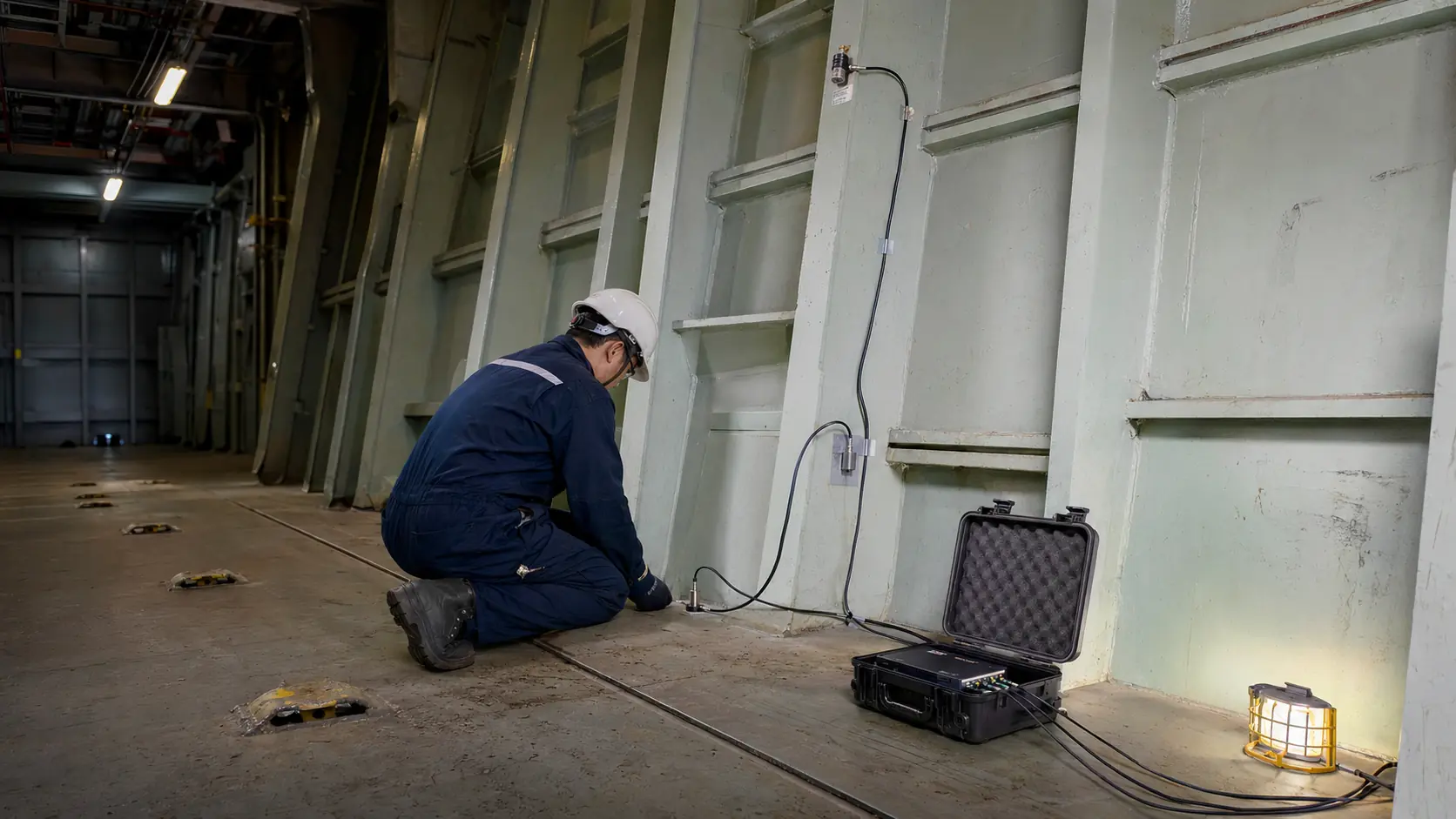
Vibration felt across a deck, superstructure or accommodation block may originate from propulsion, machinery, hydrodynamic excitation or a local structural mode.
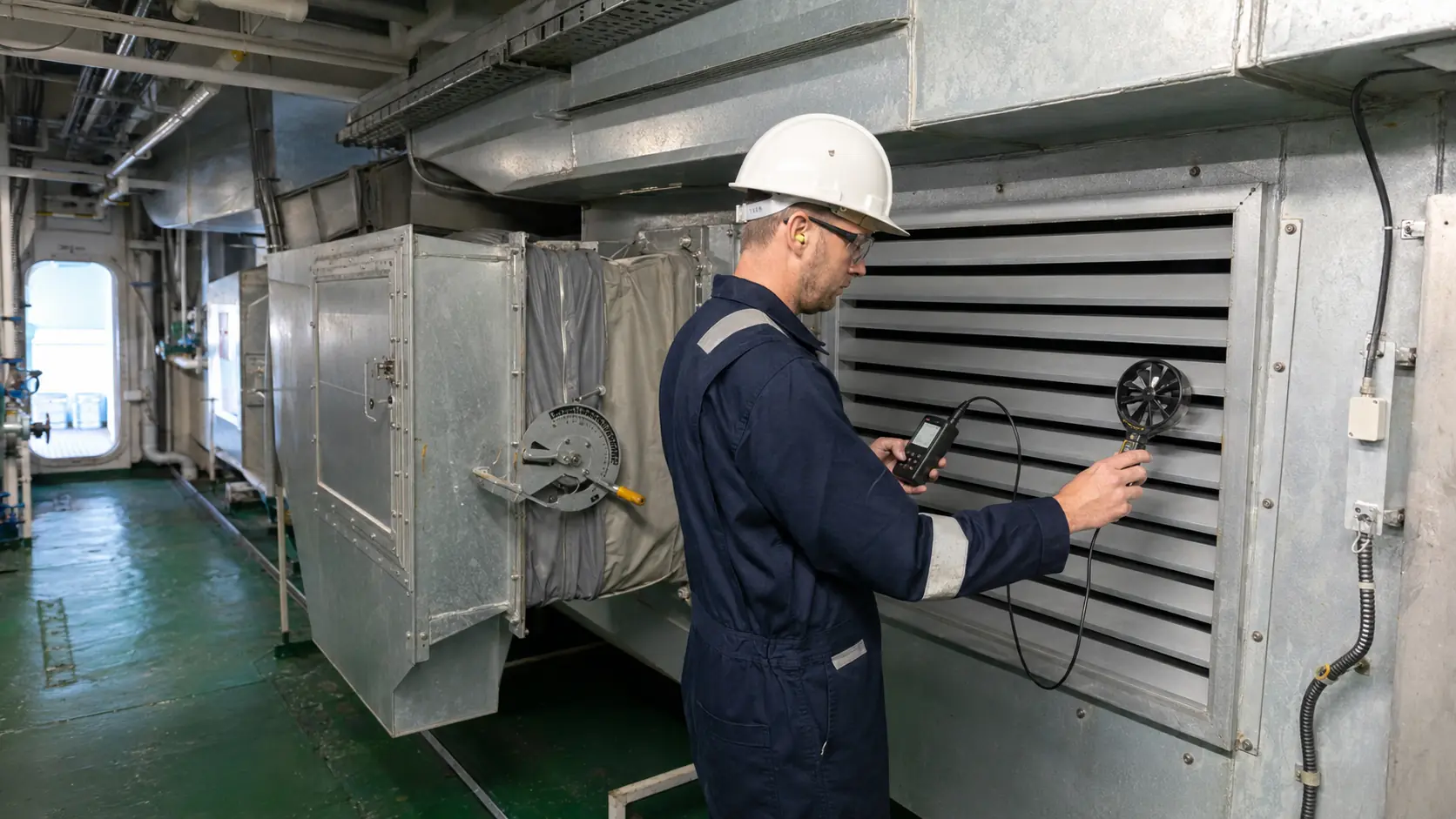
Vessel ventilation must deliver adequate outdoor air, remove heat and contaminants, maintain pressure relationships and provide comfort without creating excessive noise or drafts.
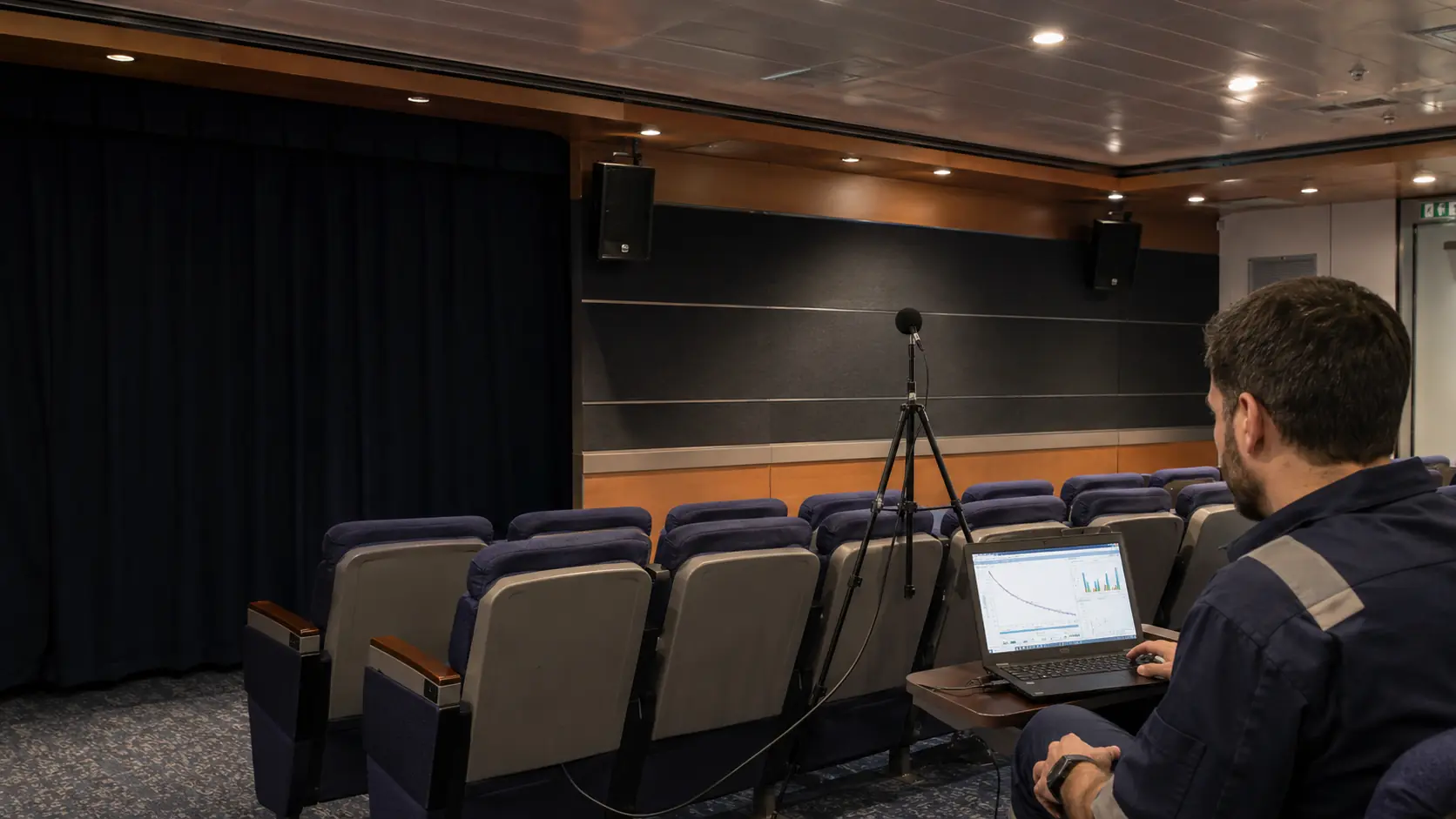
A message can be loud but difficult to understand when reflections blur syllables or background noise masks important information.
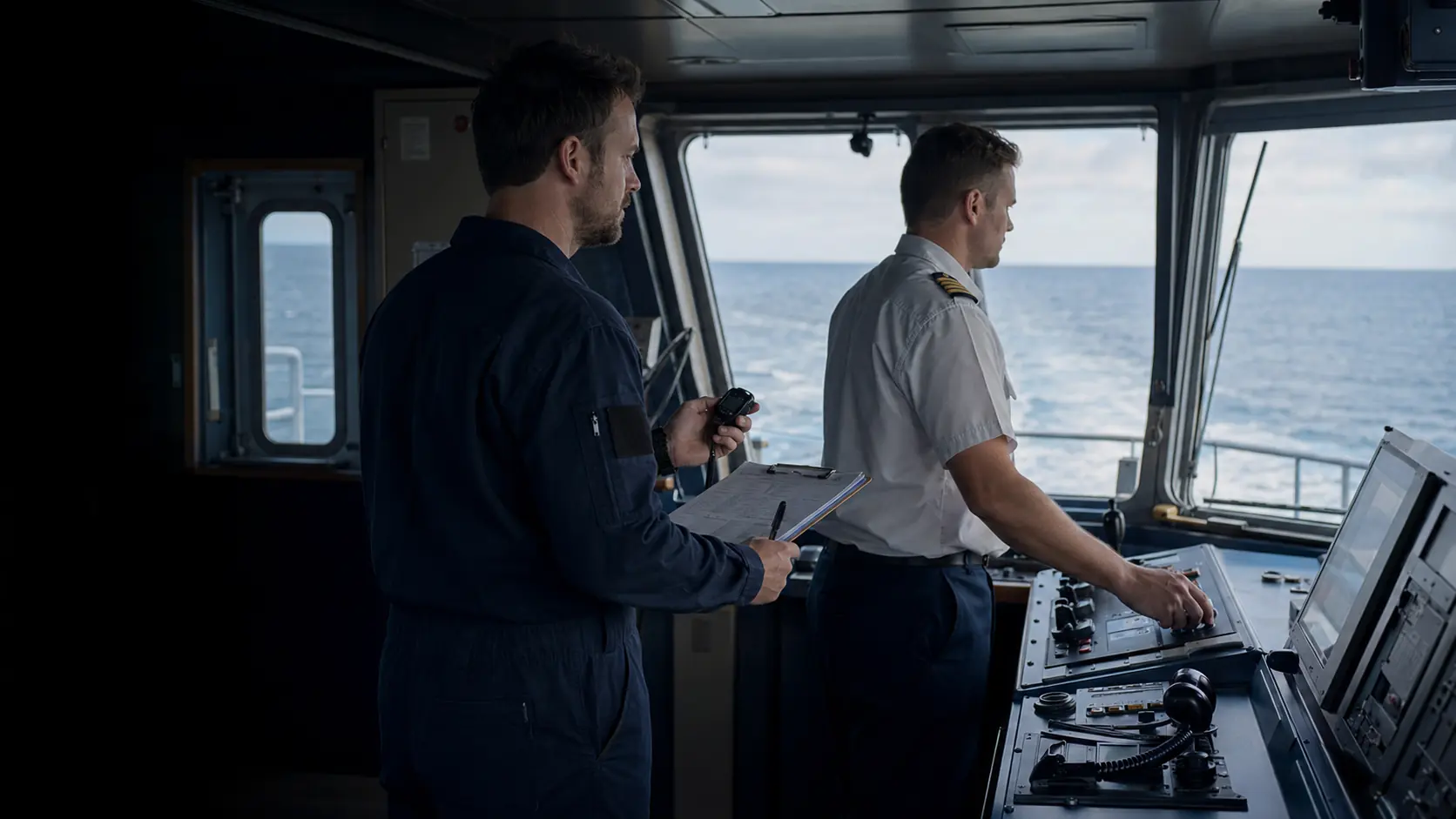
Acceptance trials compress months of design and construction into a limited operational window.
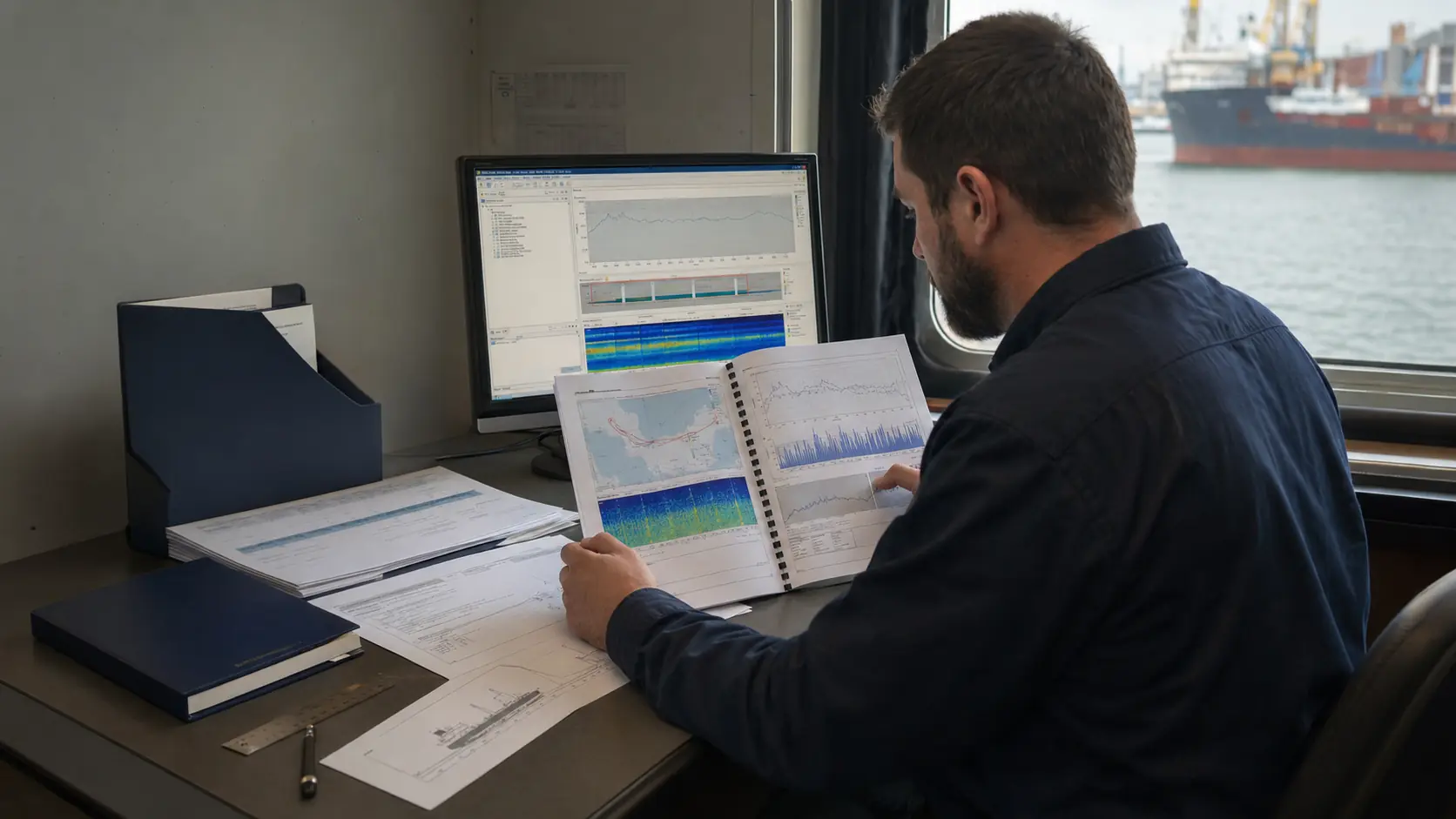
Propellers, propulsion machinery and onboard equipment radiate sound into the water.
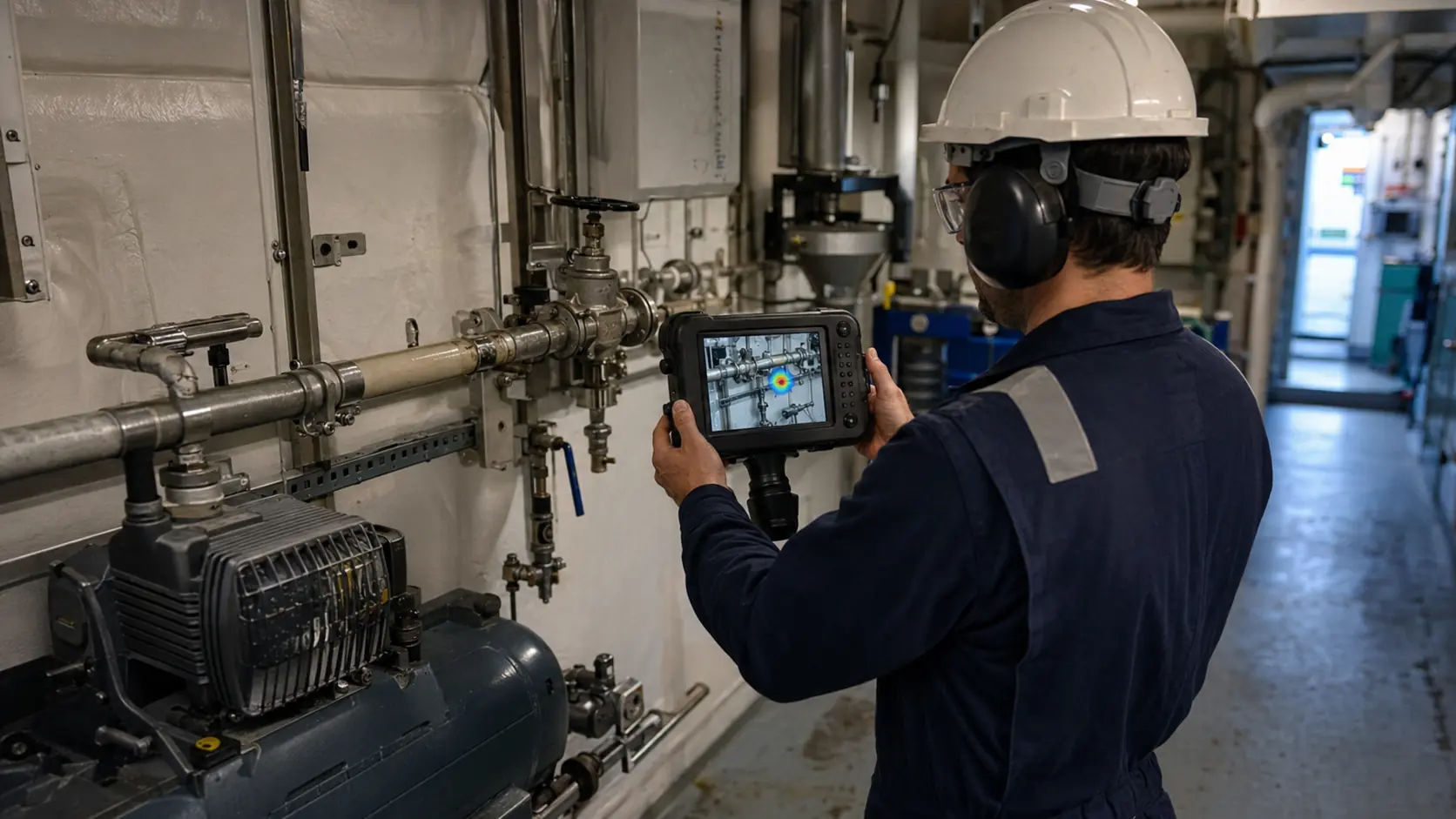
Some vessel problems do not fit neatly into one test standard.
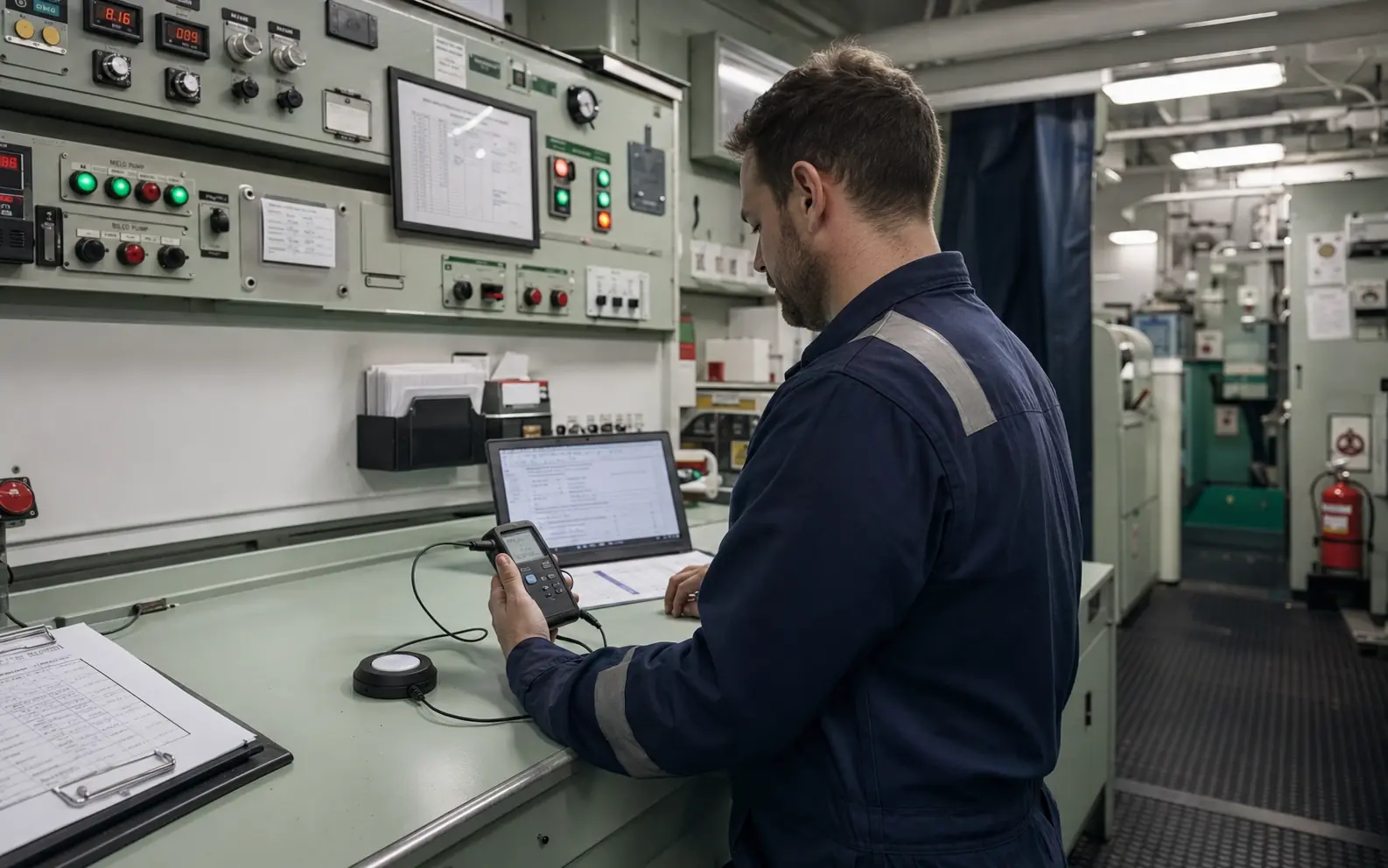
Shipboard lux measurement for work areas, machinery spaces, accommodation, passageways, stairs, control rooms and selected emergency-lighting conditions.
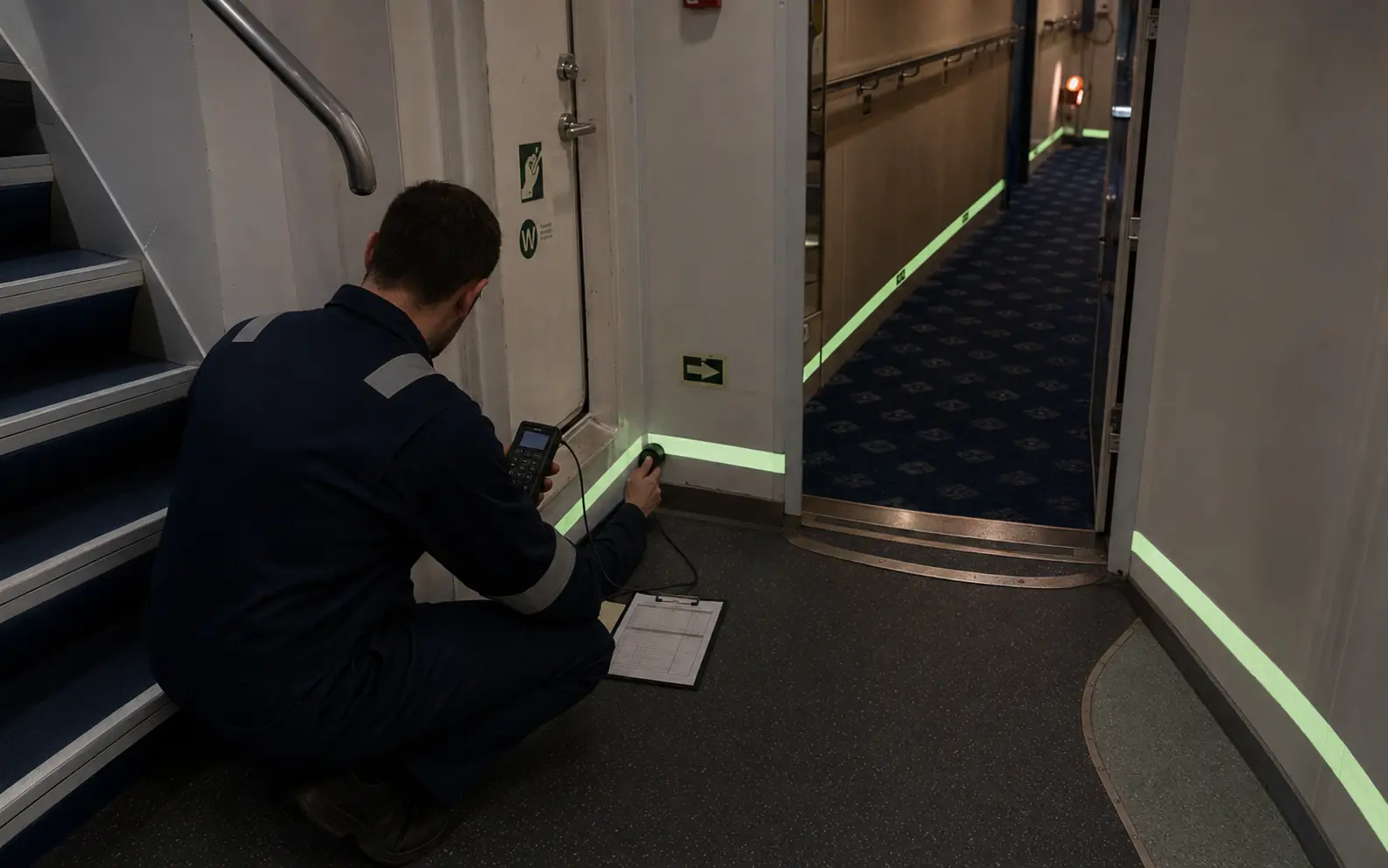
Inspection and luminance assessment of applicable ship escape-route low-location lighting, including photoluminescent or electrically powered systems.
No service matches that search. Describe the problem to our team and we will point you to the right survey.
Vessel Doctor maps technical and everyday descriptions to 21 canonical onboard services for ships, vessels, boats, cargo and container ships, tankers, bulk carriers, ferries, offshore vessels, tugs, workboats and yachts, covering testing, measurement, monitoring, survey, inspection, assessment, analysis, diagnostics and troubleshooting at ports, anchorages, shipyards, dry docks, sea trials, delivery and in-service operation.
Applicable criteria and acceptance are project-specific. Final scope is confirmed against the vessel, flag, class, contract and purpose of the survey.
START A TECHNICAL DISCUSSION
Describe the symptom, vessel type, location, operating condition and decision required—even if you do not know the formal service name. We will map the enquiry to the most focused testing, measurement, monitoring, survey, assessment or diagnostic scope.